
Biofuels, Chemicals, and Energy Stories
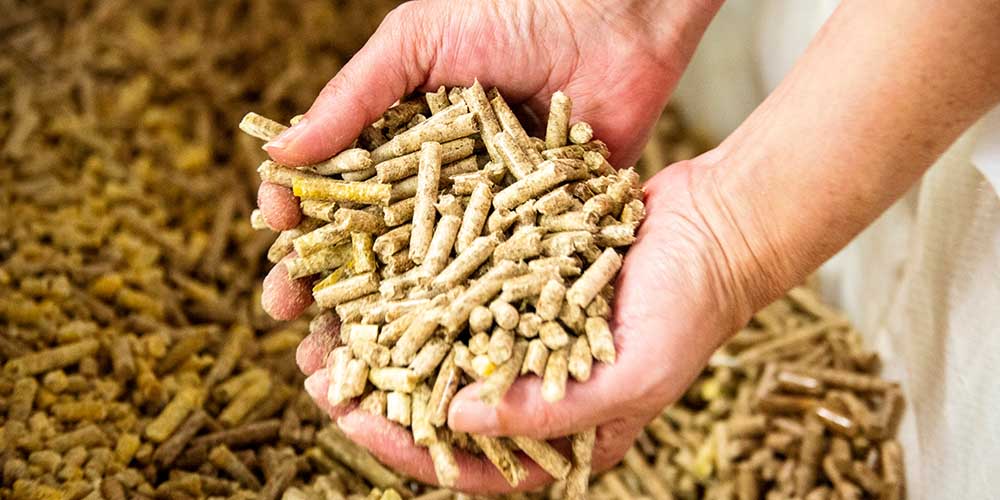
A Better, Stronger Wood Pellet
Wood pellets are a big export items for the U.S. bringing in hundreds of millions of dollars in sales annually. Since much of the pellet production in the U.S. comes from southern yellow pine in the Southeast, researchers in the Forest and Wildlife Research Center are studying ways to make a better, stronger wood pellet out of southern yellow pine. Dr. Jason Street, associate professor in the Department of Sustainable Bioproducts, and FWRC researcher, is finding ways to improve wood pellet strength, durability, and water resistance. The three-year project investigates how different additives effect the performance and characteristics of southern yellow pine pellets. Street and his team hope to continue to find ways to use limited-value materials while helping pellet manufacturers make more money.
2019

Water and Oil
Dr. El Barbary Hassan, a professor at Mississippi State, is collaborating with Mohamed El-Sakhawy from Egypt on a study to convert agricultural waste into renewable biofuels and wastewater treatment adsorbents. Funded by the U.S. Egypt Science and Technology Joint Fund, the study uses rice straw—abundant in both the U.S. and Egypt—to create bio-oil and biochar through pyrolysis. The U.S. team is focused on developing renewable biofuels, while the Egyptian team works on creating low-cost adsorbents for wastewater treatment. This project aims to reduce greenhouse gas emissions from agricultural waste, while producing valuable products for renewable energy and environmental management.
2023
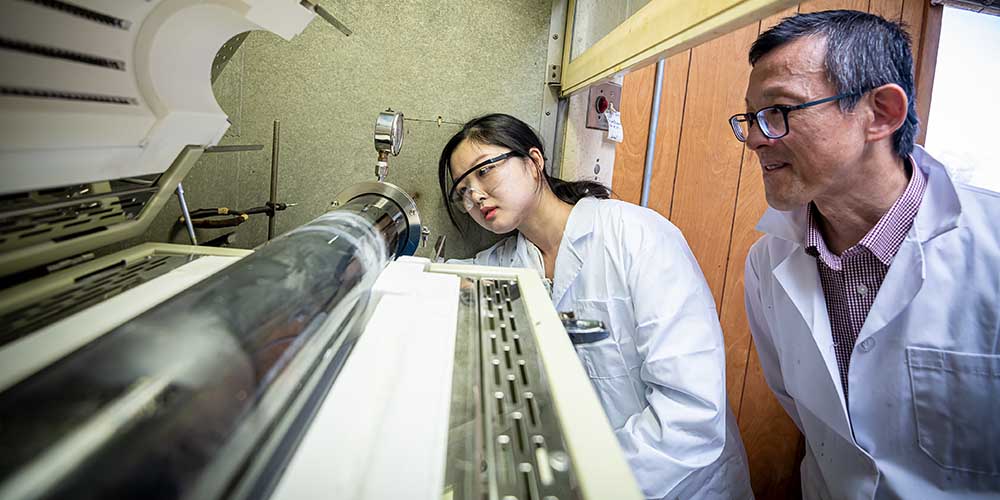
Green is the New Black
Dr. Jilei Zhang, a scientist at Mississippi State University, is researching the production of lignin-based graphene, a sustainable alternative to traditional graphite. Lignin, a byproduct from paper mills, is typically burned for energy, but Zhang's work explores turning it into bio-graphene oxide, which could have high-value applications. His team has successfully patented methods for producing graphene from lignin, with potential uses in concrete, batteries, and water treatment. Despite challenges in scaling production, Zhang is optimistic about its commercial potential, securing funding to continue research and development, particularly in strengthening concrete and removing heavy metals from water.