
Related Stories
Habitat Stories
Covering the Basics
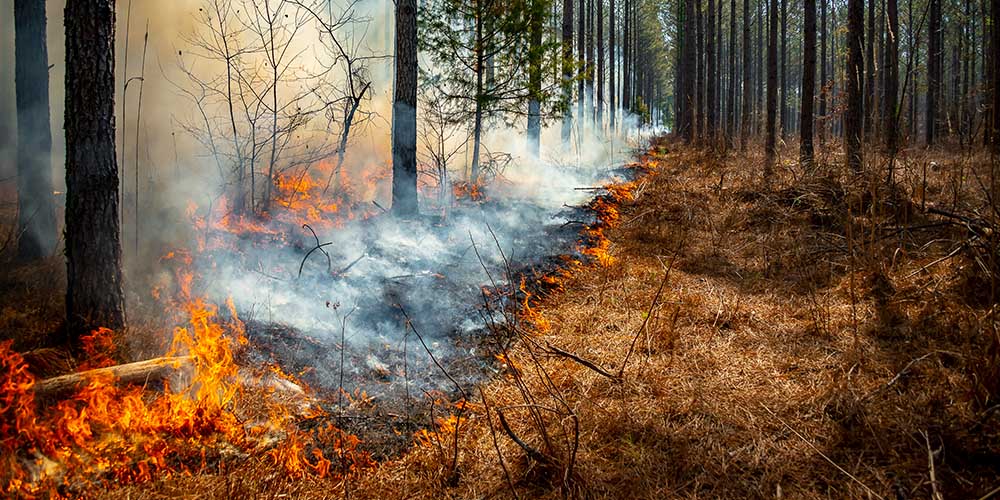
A common misconception of hunters is that plentiful food supply equals frequent visits by white-tailed deer or wild turkey to a specific habitat. Hunters plant food plots, place spin feeders, yet don’t see the wildlife activity for which they had planned. What is missing from the equation is an equally important factor—cover. That is why researchers in the MSU Forest and Wildlife Research Center set out to study how vegetation characteristics including food availability and cover affect intensity of habitat use by animals. Dr. Bronson Strickland, the St. John Family Professor of Wildlife Management in the Department of Wildlife, Fisheries and Aquaculture and FWRC researcher, and Dr. Garrett Street, wildlife, fisheries and aquaculture associate professor and FWRC scientist, sought to understand the relationship between food and cover.
Research sites offered either exclusively cover, food, both, or neither. Eighty camera stations were placed and ran continuously over a year recording when an animal entered the area and the vegetation characteristics in proximity. The data was analyzed, and researchers used a mathematical equation to determine probability of wildlife occurrence. This work is funded through the Mississippi Agricultural and Forestry Experiment Station, the Forest and Wildlife Research Center, and the MSU Foundation’s Bulldog Forest.
2020
Strategic Conservation
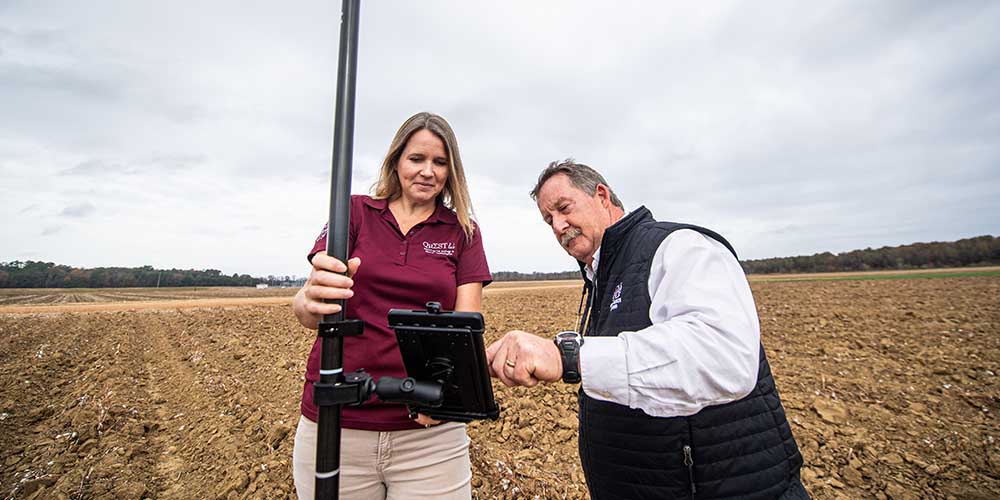
Researchers at Mississippi State's Forest and Wildlife Research Center (FWRC) are developing a web-based tool called the CRP Menu to help farmers explore conservation options in the Farm Bill's Conservation Reserve Program (CRP). The tool allows farmers to create and compare conservation plans based on their goals and eligibility, aiming to simplify the process and provide personalized information. Building on the Strategic Conservation Assessment (SCA) tool, it will be adaptable for different regions and conservation issues. The team is using a social science approach, gathering input from farmers and stakeholders across 12 counties in eight states to shape the tool. After testing in these areas, the goal is to expand it nationally, improving farmer engagement, reducing barriers to participation, and enhancing conservation outcomes.
2023
Light a Fire, Save a Bird
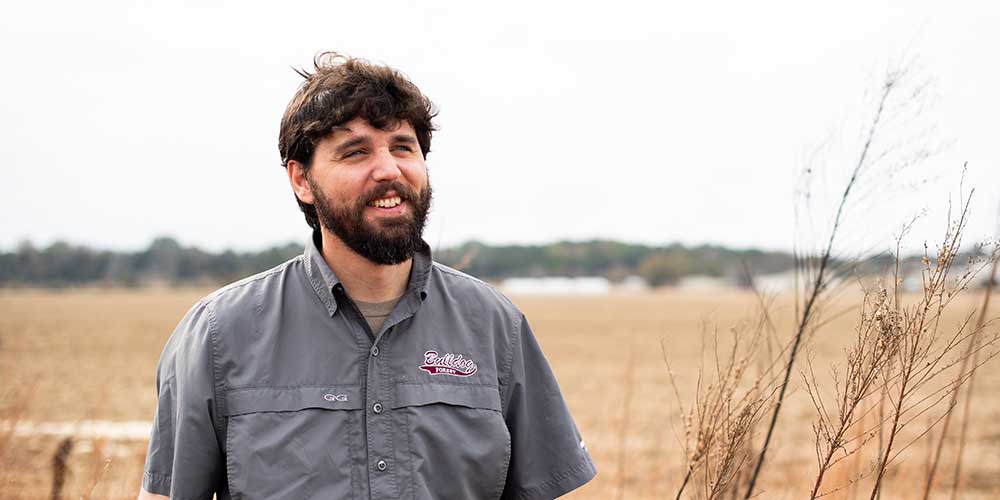
Mississippi State's Forest and Wildlife Research Center (FWRC) is studying the impact of prescribed fire on the Bachman's sparrow, a ground-nesting bird whose population has declined due to habitat loss and fire exclusion. Dr. Mark McConnell leads the research, focusing on whether burning during the growing season (as opposed to the traditional dormant season) can help restore the bird's habitat. The study, conducted across 1,800 acres with 15 burn plots, found that a mix of both dormant and growing season burns benefits the sparrow. The team conducted bird surveys and vegetation assessments before and after the burns to understand how fire timing influences ground cover and sparrow populations. Dr. Kristine Evans contributed expertise on the bird's behavior and habitat needs.
The goal is to determine the best fire management strategies to support healthy Bachman's sparrow populations and improve conservation efforts for this species.