
Related Stories
Interactions Stories
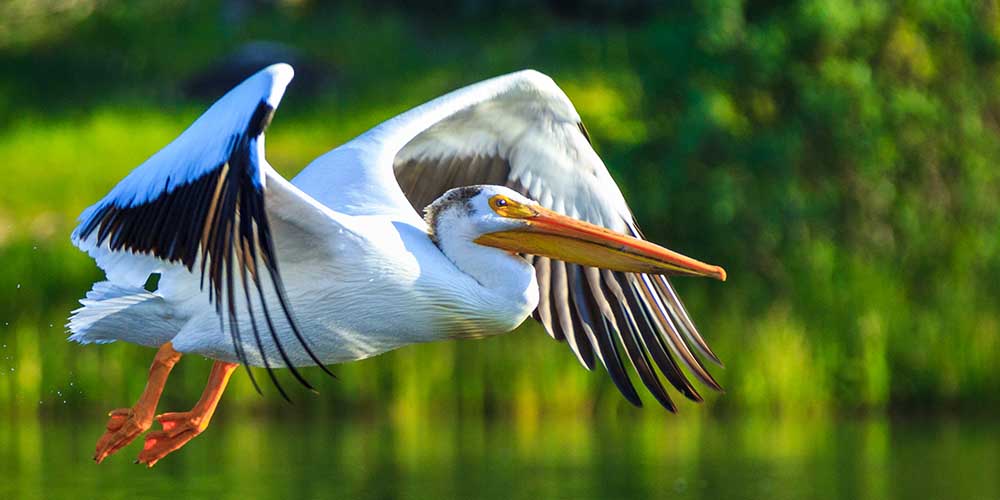
A Pelican Breach
While the white pelican is a majestic bird, it can also be a major nuisance to Mississippi catfish farmers. USDA’s Animal and Plant Health Inspection Service (APHIS) estimates a pelican would need to consume up to 11 catfish per day to meet its daily energetic requirement. This means an average flock of 250 pelicans would consume roughly 2,750 fish per day, resulting in a daily production loss of nearly $3,000. Couple that with the fact that the birds are host to a variety of catfish parasites including the trematode Bolbophorus damnificus, which can cause production losses upwards of 60 percent, and it becomes evident that pelicans can devastate catfish ponds. To help catfish farmers mitigate pelican predation, more must be learned about the bird itself.
Specifically, FWRC researchers are studying how, when, and where these birds migrate and how certain factors such as wind, thermals, and climate change influence their fight patterns. They hope by answering those questions, they can help catfish farmers better estimate when and where ponds may be at greatest risk for pelican predation. The researchers, led by Dr. Guiming Wang, wildlife, fisheries and aquaculture professor, have built a model, which shows distribution based on the bird movement, to estimate pelican home ranges across seasons. U.S. Department of Agriculture, Wildlife Services, Wildlife Research Center funded the work.
2020
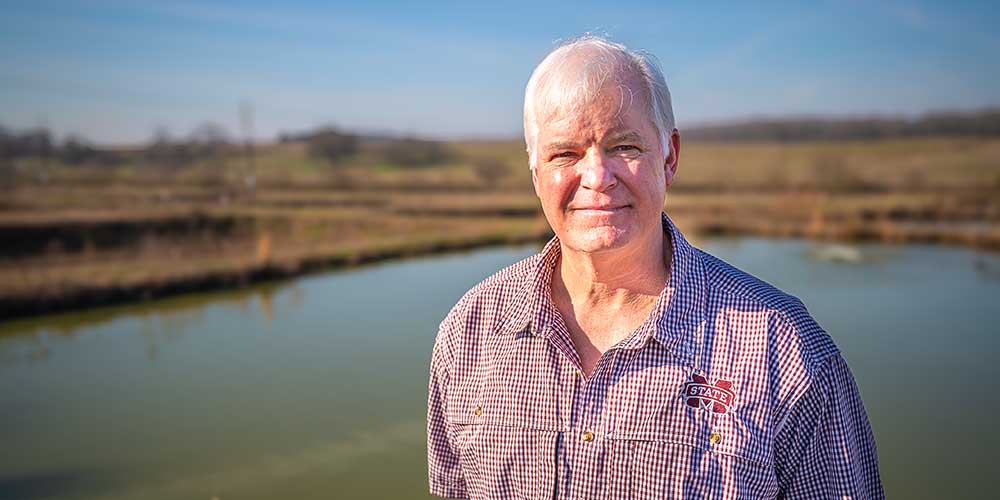
What's for Dinner?
Southern aquaculture, especially catfish farming in Mississippi, faces significant challenges from migratory waterbirds, particularly the double-crested cormorant. These birds, attracted by the dense fish populations in aquaculture ponds, cause millions of dollars in losses each year. A study by Dr. Brian Davis and his team found that cormorants consume up to $12 million in catfish annually, and when factoring in bird deterrent costs, the total financial impact is around $64.7 million per year. While various methods, like disrupting bird roosts, have been tried, there is no perfect solution. Research is ongoing, with new methods, such as drones, being explored.
Additionally, a study on scaup ducks found that their impact on fish farms varies with the season, suggesting farmers should focus on bird management during colder months when ducks are more likely to consume fish. Davis emphasizes the need for continuous research and evolving management practices to address these conflicts as the aquaculture industry grows.
2023
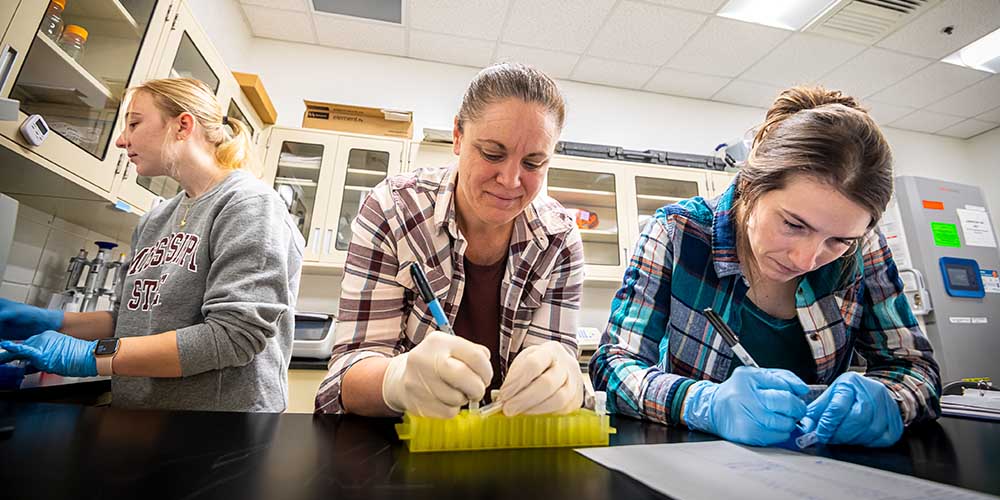
Monitoring Resistance
Dr. Dana Morin, a wildlife assistant professor at Mississippi State, is studying the role of wildlife in the spread of antimicrobial resistance (AMR), which makes infections harder to treat. AMR can be transmitted through bacteria, fungi, and other pathogens that evolve resistance to medications. Morin is focusing on how species like black bears, deer, and ducks, with their diverse ecologies and interactions with humans, could spread AMR. She collaborates with Dr. John Brooks from the USDA to analyze bacterial cultures and DNA from animal fecal samples, investigating genes linked to AMR. Additionally, Morin is exploring the use of dung beetles as a cost-effective method for identifying AMR hotspots in the environment.
Her research aims to understand how wildlife movements and human interactions contribute to the spread of AMR, ultimately helping predict and prevent its transmission.