
Related Stories
Habitat Stories
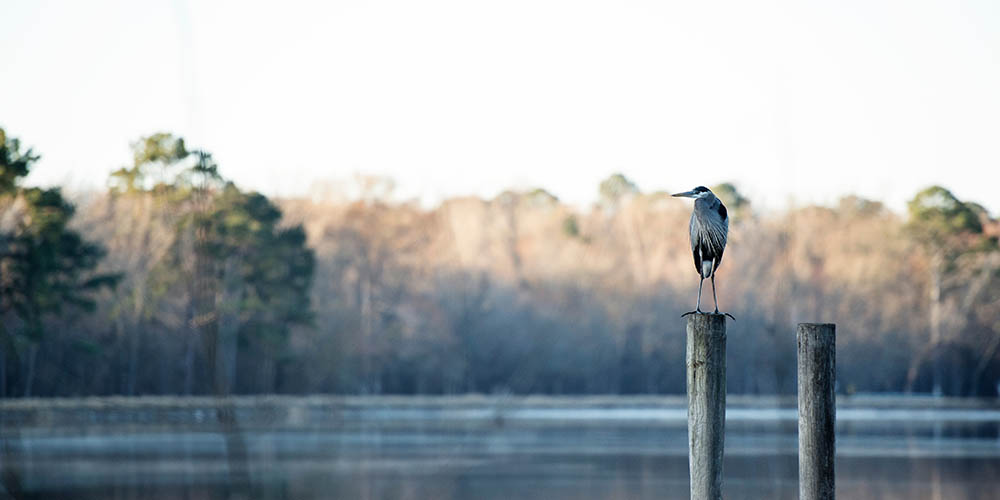
Research Designed to Create Beneficial Dynamics Between Lake Management and Water Regimes
Dr. Mike Colvin, associate professor, DR. J. Brian Davis, James C. Kennedy Endowed Associate Professor in Waterfowl and Wetlands Conservation, and their team of graduate students in the Department of Wildlife, Fisheries and Aquaculture, are assessing the impact of management practices on fisheries, birds, and plant communities in Bluff Lake and creating a model to assist managers in making scientifically informed decisions as water levels expand and recede. One part of the study looked at how common sportfish respond to drastic changes in water volume and how those changes affect fishing in those waters.
They also looked at how drawdowns, a management practice conducted to encourage growth of plants that feed ducks and birds, affects fish communities. After three years of research, the team designed a model that adequately quantifies possible outcomes of water level fluctuations and assesses benefits of various water level management decisions, taking into consideration the impact on wildlife and fishing conditions.
2021

Branching Out for Birds
Birds are valuable bioindicators, providing important insights into the health and condition of forest ecosystems. In Mississippi, where roughly half of the state's land is covered by working forests, understanding how forest management affects bird populations is especially important. To explore this relationship, scientists in Mississippi State University's Forest and Wildlife Research Center conducted a study examining how different forest environments influence bird communities. Led by professor Dr. Kristine Evans in partnership with Weyerhaeuser Company, the study tested whether birds prioritize the overall amount of available forest habitat or the way that habitat is arranged across the landscape. Researchers used bird point counts and vegetation surveys to assess bird species and habitat conditions within loblolly pine stands across Kemper, Noxubee, Webster, Chickasaw, and Calhoun counties.
The results revealed that bird species responded differently to various landscape configurations, challenging the study's original hypothesis. Rather than responding uniformly to the amount and arrangement of forest habitat, individual species showed distinct preferences. These findings offer valuable insights for both avian researchers and the timber industry. They suggest that relatively small adjustments to forest management practices could help support bird populations, including declining species such as the Northern bobwhite and prairie warbler. According to the study, both species show a preference for young forest patches, highlighting opportunities to incorporate habitat considerations into working forests while maintaining productive timberlands.
By better understanding how birds respond to forest landscapes, researchers and forest managers can identify practical strategies that support healthy avian communities alongside sustainable forestry.
2024
Strategic Conservation
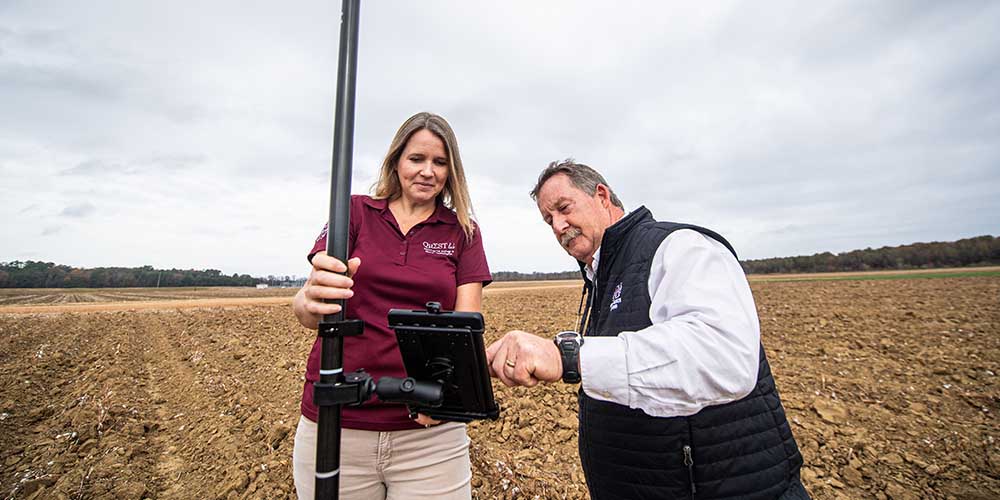
Researchers at Mississippi State's Forest and Wildlife Research Center (FWRC) are developing a web-based tool called the CRP Menu to help farmers explore conservation options in the Farm Bill's Conservation Reserve Program (CRP). The tool allows farmers to create and compare conservation plans based on their goals and eligibility, aiming to simplify the process and provide personalized information. Building on the Strategic Conservation Assessment (SCA) tool, it will be adaptable for different regions and conservation issues. The team is using a social science approach, gathering input from farmers and stakeholders across 12 counties in eight states to shape the tool. After testing in these areas, the goal is to expand it nationally, improving farmer engagement, reducing barriers to participation, and enhancing conservation outcomes.